


By Dr. Bijan Nowzari, DC, More Life Chiropractic, Burbank, CA
If your back feels worse in the first few minutes after getting out of bed, your mattress may not be the problem. The way you sleep could be putting your spine under stress for 6 to 9 hours every night. Choosing one of the best sleeping positions for back pain helps keep your spine in a neutral position, reducing strain while you sleep.
The short answer: sleep on your side with a pillow between your knees, on your back with a pillow under your knees, or in a slightly reclined position if you have spinal stenosis. Skip stomach sleeping and the tight fetal curl.
This Burbank guide covers the correct setup for each position, plus the pillow and mattress adjustments that can make them more effective.
Understanding how to sleep with back pain starts with recognizing that your spine doesn't get a break at night. Instead, it experiences a different kind of stress. During 6 to 9 hours of sleep, your spine stays in whatever position you settled into, and even small stresses can add up when they're applied night after night.
According to the Cleveland Clinic, sleeping on your stomach can place extra stress on your back and neck, which is why sleeping on your back or side is generally a better choice for people with back pain.
The good news is that small adjustments to your sleeping position can make a big difference over time. The three positions below help reduce strain on the spine, while the two that follow tend to worsen it.
Now that you know why sleep posture matters, let's look at the three positions most likely to reduce strain on your spine. For many people, the best sleeping position for lower back pain is simply the one that keeps the back supported and comfortable throughout the night.
May be helpful for: General lower back pain, sciatica, a herniated disc, and back pain during pregnancy.
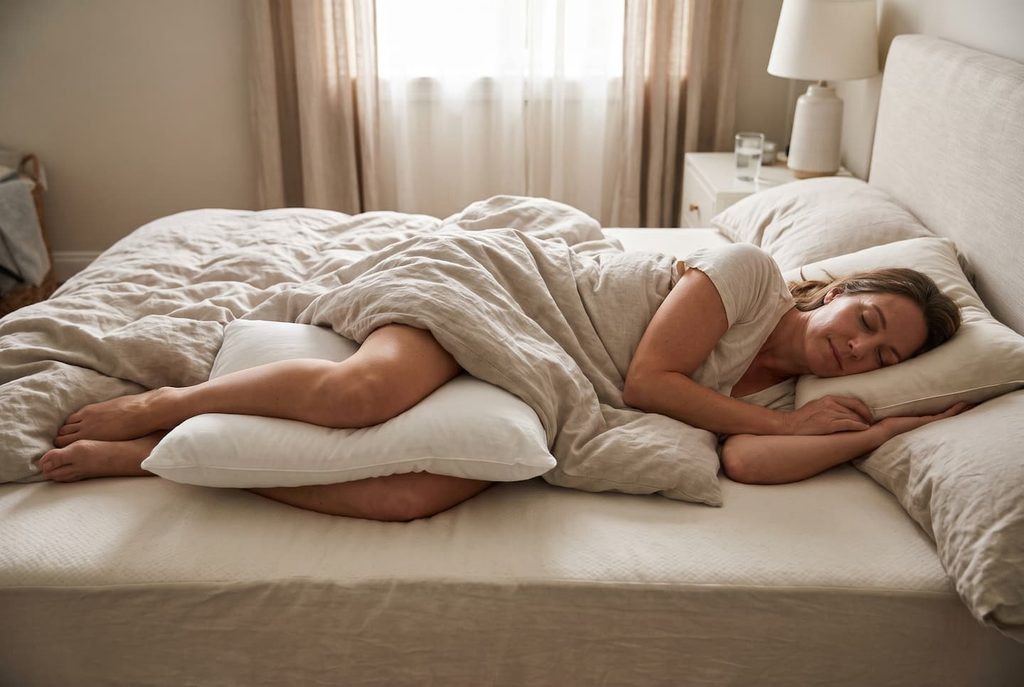
Setup:
Why it works: The pillow helps prevent your top leg from pulling your pelvis out of alignment and twisting your lower back. If you're pregnant, check with your OB or midwife to make sure this position is appropriate for you.
May be helpful for: General back pain, disc-related discomfort, and some post-surgical recovery plans when approved by your surgeon.
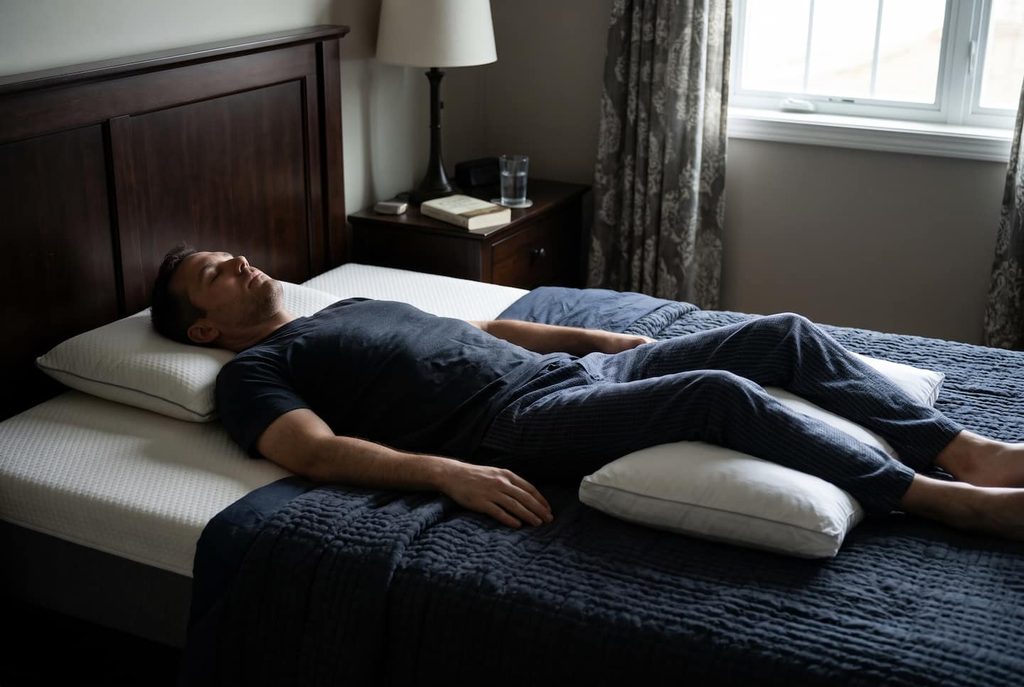
Setup:
Why it works: Bent knees can relax tight hip flexors and help your lower back settle into a more comfortable position.
Best for: Spinal stenosis and conditions where leaning forward eases pain.
Setup: Raise an adjustable bed to a slight recline and place a pillow under your knees. A wedge pillow is an alternative.
Why it works: Spinal stenosis narrows spaces in the spine, which can place pressure on nearby nerves. A slight forward bend may ease pressure. If you haven't received a diagnosis, seek an evaluation before relying on this position.
| Assess yourself: Give your new sleeping position 2 to 4 weeks before deciding whether it's helping. If pain persists or worsens, consult a healthcare professional. |
Sleeping on your stomach and in a tight fetal curl are two positions that can place extra stress on your back. The good news is that both have simple fixes.
To breathe face down, you turn your head to one side and hold it there for hours. Meanwhile, your midsection sinks, pushing your lower back into extension, an exaggerated arch. With back or neck pain, this is often the first position worth changing.
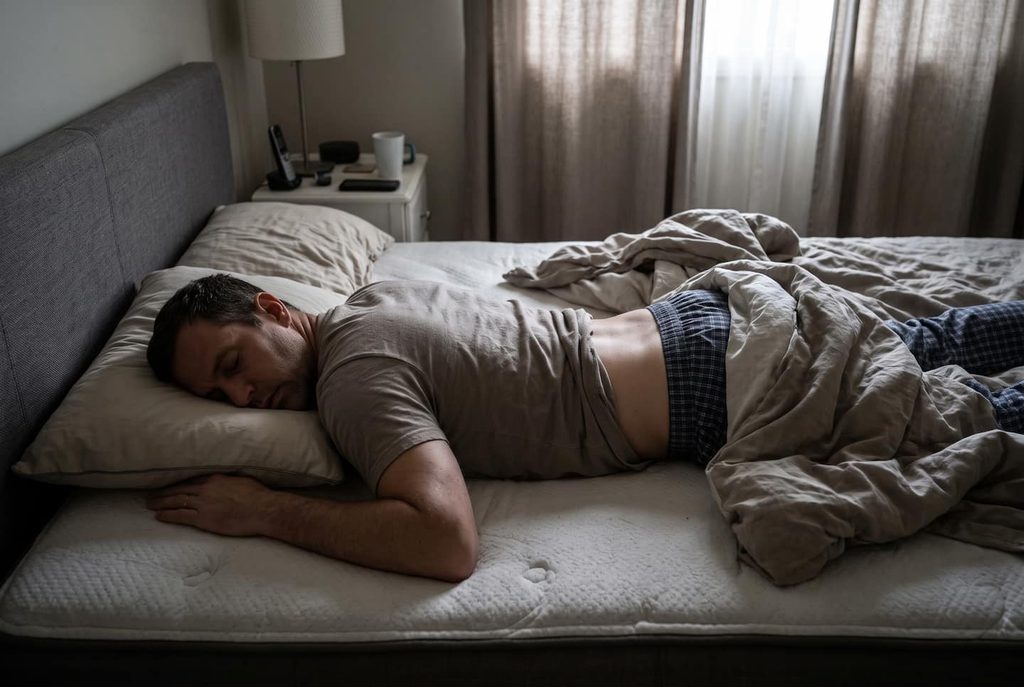
How to transition:
Pulling your knees to your chest can keep your lower back flexed for hours at a time, which may contribute to morning stiffness. Loose side sleeping is fine. Keep your knees bent but away from your chest, and let the knee pillow open the position.
After 20 years of sleeping on your stomach, you'll still wake up on your stomach sometimes. That's normal. Progress counts.
Your pillow and mattress help support your sleeping position. Before replacing your mattress, make sure your pillow and sleep setup are working for you.
| Sleep Position | Pillow Height | Why it Matters |
| Side | Firm, tall enough to keep your neck level with your spine | Keeps your head from tilting up or down |
| Back | Thin to medium | A tall pillow pushes your chin toward your chest |
| Stomach (while transitioning) | Flat, or none | Any height adds to the neck rotation |
| Knee pillow | Firm enough to hold its shape all night | A flattened pillow stops supporting you |
Side sleepers: have someone check from behind to make sure it remains level with your spine.
"Firmer is better" is common advice, but research suggests otherwise. In a randomized trial of 313 adults with chronic low back pain published in The Lancet, Kovacs and colleagues found that people on medium-firm mattresses had better outcomes after 90 days for pain in bed, pain on rising, and disability than those on firm mattresses.
Your mattress may contribute to discomfort if it:
A new mattress can be a significant expense, so try changing your pillow and position first. If pain persists, consider seeking back pain treatment in Burbank.
If better positioning, a properly sized pillow, and a mattress check haven't improved your mornings, the pain may not be coming from how you sleep. At that point, an exam will tell you more than another pillow will.

Common non-positional causes include:
Telling these apart takes an exam, not guesswork. A back pain chiropractor in Burbank will typically begin with a posture assessment, range-of-motion testing, and orthopedic and neurological tests as warranted by your symptoms. Treatment is then matched to what the evaluation shows.
If your morning back pain hasn't budged, back pain treatment in Burbank at a diagnostic-first practice is the next step.
Some symptoms shouldn't wait for any of this. See a physician or go to the ER if back pain comes with:
Saddle numbness and bowel or bladder changes can signal cauda equina syndrome, which needs emergency care.
To learn how to sleep with lower back pain, start with what's free: sleep on your side or back with the right pillow setup and give the changes time to work. If your back still hurts in the morning, it's time for an exam to identify the cause rather than another round of guessing.
If position changes haven't made a difference, Dr. Bijan Nowzari, DC, can evaluate what may be contributing to your symptoms and recommend the next steps. Book your back pain evaluation online or call (877) 883-3674.
Side sleeping with a pillow between the knees helps keep the pelvis aligned. Sleeping on your back with a pillow under the knees is another good option.
Yes. If your sleeping position contributes to your symptoms, switching to a more supportive position may reduce morning stiffness and discomfort. Persistent pain may need evaluation for other causes.
It can be. Turning your head strains your neck, while a sinking midsection may cause your lower back to arch. Hug a body pillow to help prevent rolling onto your stomach.
Evidence favors medium-firm mattresses. Research published in The Lancet found better pain and disability outcomes for adults with chronic low back pain on medium-firm than on firm mattresses. Sagging may also contribute to discomfort.
If changing positions and improving your sleep setup haven't helped, consider an evaluation. Seek care sooner if pain radiates into your leg, worsens despite rest, or is accompanied by numbness or weakness.

Ready to receive results-driven care? Skip your search for a “chiropractor near me” and reach out to More Life Chiropractic. Dr. Nowzari, our trusted chiropractor in Burbank, will walk you through your options and answer your questions to help you confidently begin your recovery journey. Book a consultation today!