

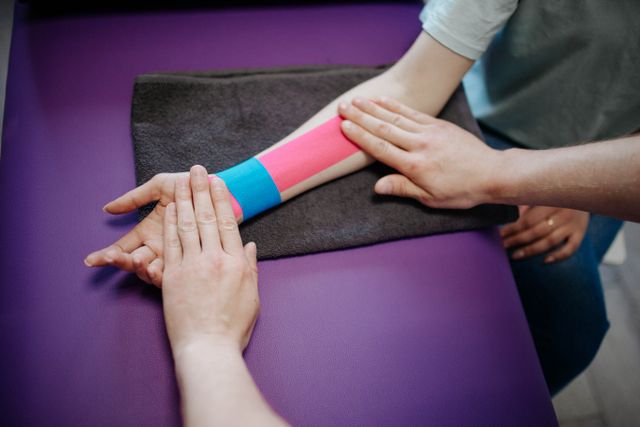
An athletic injury puts your entire season on pause, and waiting to get the right help only drags out your recovery. When searching for sports injury treatment in Burbank, you immediately hit a wall of choices: chiropractic care, physical therapy, or sports medicine. Getting the wrong care means lost time when you need to be healing.
The effective treatment route depends on several factors, such as the severity of your injury and its impact on your life and performance. A sudden hamstring strain requires a completely different approach than a dull hip ache that has been building up for months.
Find out which treatment your injury needs right now.
| Chiropractic Care | Physical Therapy | Sports Medicine | |
|---|---|---|---|
| What It Treats | Joint restrictions, spine and joint misalignments, muscle tension | Muscle weakness, poor movement patterns, post-surgery weakness and tension | Acute injuries such as fractures, complete soft-tissue tears, concussions, and dislocations |
| Its Approach | Hands-on adjustments, complemented by approaches like kinesiology taping and sports rehabilitation | Strengthening exercises, movement retraining, posture correction | Diagnostic evaluation, imaging, medication management, and surgical referrals when necessary |
| Best First Choice Scenario | You have restricted movement, joint pain, or recurring discomfort in the same spot | You are recovering after surgery, measurably weak, and keep getting the same injury | You suspect a fracture, felt a muscle pop, cannot bear weight on a limb, or sustained a head injury |
Chiropractic care involves gentle, targeted adjustments to your spine and joints to restore their alignment after an injury. This can ease strain on surrounding muscles, ligaments, and nerves caused by misalignments.
A joint that doesn’t move well or at all causes surrounding joints to compensate by moving more than they should.
For example, if your right ankle loses mobility, your knees and hips may start to bear more of your bodyweight when you walk, run, or lift objects, making them more susceptible to injury. Chiropractic adjustments directly target these restrictions to prevent those compensatory patterns from setting in.
Evidence note: A 2015 comparative trial found this modality, in combination with rehabilitation, to be more effective in reducing pain and improving joint mobility than rehabilitation alone. This emphasizes chiropractic care as a crucial component in many noninvasive, drug-free sports injury recovery programs.
Adjustments alone are usually not enough to address soft tissue injuries. While they can realign your spine and joints, your muscles, tendons, and fascia (the connective tissue surrounding all your internal structures) may remain injured, which is why a chiropractor for athletes often performs adjustments alongside soft tissue work:
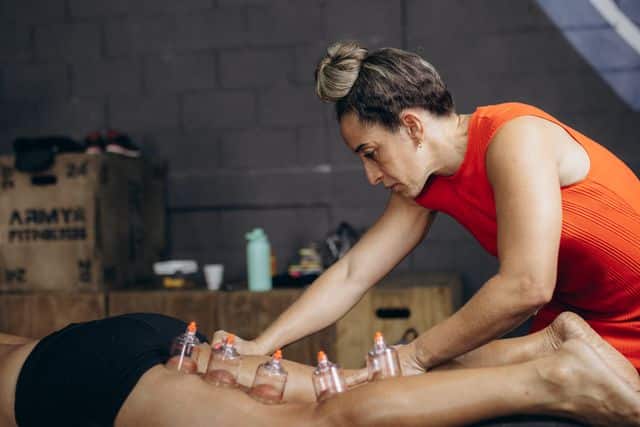
Many injuries respond well to chiropractic care. If you have any of the following, it’s a good idea to see a chiropractor vs. a physical therapist for your sports injury treatment in Burbank.
See a sports chiropractor when your condition involves imbalanced or restricted mobility, such as pain during certain movements, unexplained joint discomfort, or recurring stiffness, especially when there are no visible signs of acute injury (such as swelling, deformity, or fracture).
Injuries and surgeries may leave you weak, tense, and with poor coordination, among many other problems. Physical therapy helps restore your strength, flexibility, and function after these events, enabling you to return to your sport safely and comfortably.
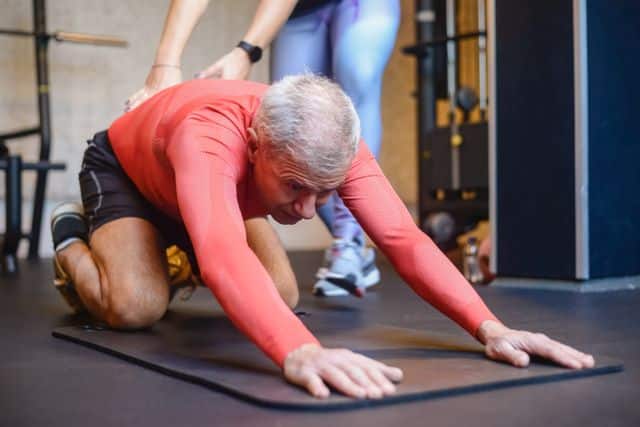
Physical therapy focuses on restoring your strength and mobility through functional exercise.
The movements progress gradually: you begin at a level the injured tissue can tolerate, then increase resistance, range, and speed on a structured schedule. This approach ensures the affected limb is unlikely to sustain the same injury when you return to training.
Strength without body coordination only means you can generate force, but only in a suboptimal way. Movement retraining corrects this problem by teaching your body to move safely so that other structures won’t have to compensate.
For example, it can help you maintain a solid neutral spine when lifting weights or improve your landing to avoid twisting your ankle. By correcting faulty movement patterns, physical therapy reduces the risk of reinjury and supports long‑term performance.
In California alone, there are hundreds of physical therapists specializing in sports rehabilitation. In fact, data from the American Board of Physical Therapy Specialties (ABPTS) shows 246 certified sports specialists statewide as of 2025.
This reflects the strong demand for providers who help athletes recover from various injuries, including:
Physical therapy from a trusted athletic injury clinic should be your first step when your injury causes you to lose strength, requires structured recovery after surgery, or keeps recurring despite clearance to train.
Sports medicine doctors practice in managing activity‑related injuries. They prescribe treatment and coordinate surgical care when needed, typically handling more severe cases that don’t respond to conservative care.
Sports medicine doctors can order diagnostic tests and imaging that conservative providers, such as chiropractors and physical therapists, often can’t. This allows them to locate and identify tears, fractures, and dislocations more accurately.
Sports medicine physicians may prescribe anti-inflammatory medications, administer corticosteroid injections, and refer to orthopedic surgeons when your injury has passed the point that rehabilitation can address. They also oversee recovery for serious injuries, including concussions, ensuring safe return‑to‑play decisions.
Unlike physical therapists and chiropractors, sports medicine doctors typically address acute or severe conditions, such as:
While chiropractic care and physical therapy for sports injuries help address mild to moderate conditions, it’s better to see a physician if any of these apply:

Joint function and functional ability are necessary for recovery from both chronic and acute sports injuries. Restoring mobility in a joint without rebuilding the surrounding muscles only preserves instability; likewise, loading a joint that cannot reach its full range of motion leads to compensation and further strain.
If that’s the case, then there’s no point in pitting these modalities against each other. At More Life Chiropractic, Dr. Bijan Nowzari integrates both chiropractic care and physical therapy, along with other supportive treatments, into a single plan so that each approach reinforces the other, helping reap the combined benefits rather than relying on just one.
The culture and environment around the Burbank community keep people moving, which is why sports injuries are very common in the area. That’s also why having accessible, focused care is essential, so athletes and active residents can recover quickly and safely without losing momentum.
Because each person has different injuries that require tailored care, treatment at More Life Chiropractic is always personalized to your specific injury and sport. Consequently, you can heal more optimally and return to doing what you love pain-free.
An acute sports injury happens suddenly from a single event, such as twisting your ankle from a bad landing. Meanwhile, a chronic sports injury develops gradually over time, often from repetitive strain or overuse.
Absolutely. Coordinated care between sports medicine doctors, chiropractors, and physical therapists is common, especially after a physician clears you for rehabilitation or manual therapy.
You should seek treatment as soon as possible, ideally within the first 72 hours. Early assessment catches problems before they worsen and develop further complications. However, for suspected fractures, dislocations, or concussions, visit a sports physician immediately.
Yes. Chiropractic care is a drug-free approach that addresses the mechanical source of pain without masking it, which can reduce reliance on pain medication over time. However, never change or stop prescribed medication without consulting your physician.
It depends on your injury and its severity. Minor joint restrictions may heal within a few visits, while overuse injuries often need several weeks of consistent care. Dr. Nowzari will provide you with an estimated recovery timeline during your initial evaluation to set expectations.
Think of chiropractic care as the key to restoring joint motion and relieving muscle tension, and physical therapy as the tool to rebuild your strength and athletic movement. When an injury is severe, a sports medicine doctor steps in to handle advanced medical care.
Thankfully, you don't have to choose between a chiropractor and a physical therapist to treat your sports injury in Burbank, CA. Dr. Bijan Nowzari of More Life Chiropractic offers both treatments under one roof, helping you recover faster, improve your performance, and get back to competing at your best. Schedule a consultation with us today!
Ready to receive results-driven care? Skip your search for a “chiropractor near me” and reach out to More Life Chiropractic. Dr. Nowzari, our trusted chiropractor in Burbank, will walk you through your options and answer your questions to help you confidently begin your recovery journey. Book a consultation today!